
1. Chemical identity reference
Public chemical databases list Adenosine Triphosphate Disodium Salt under the stated identity; this reference supports identity review and does not replace the batch COA.
Citation: PubChem compound recordView source
ATP disodium
CAS 987-65-5
Dry-Basis Assay>95% dry-basis assay
ATP disodium powder for enzyme-reaction systems and nucleotide assay development
Adenosine Triphosphate Disodium Salt Powder (CAS 987-65-5), specification >95% dry-basis assay. ATP disodium salt for enzyme-reaction and biochemical-reagent evaluation, with assay reported on a dry basis. Batch COA and evaluation samples are available. MOQ: 1 kg. NAD+ ingredients
Quote / sample & delivery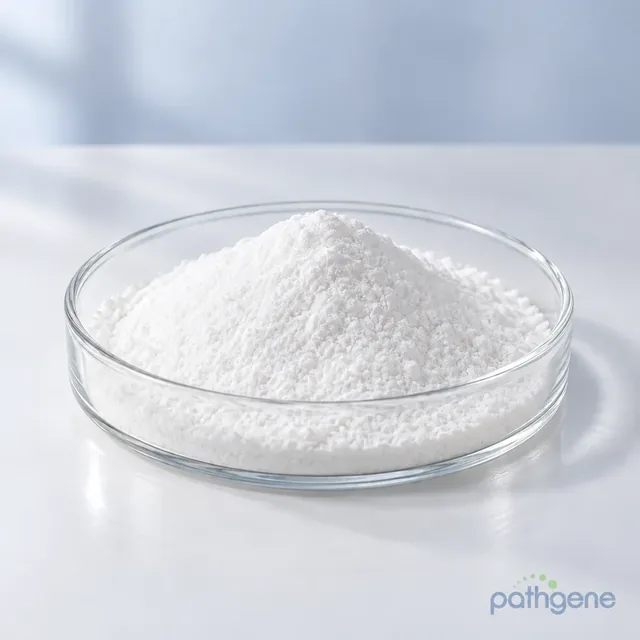
Key Specifications
| Product Positioning | ATP disodium powder for enzyme-reaction systems and nucleotide assay development |
| Application Scenarios | enzyme-reaction systems · cell-culture research · nucleotide formulation screening |
| CAS Number | 987-65-5 |
| Dry-Basis Assay | >95% dry-basis assay |
| Molecular Formula | C10H14N5Na2O13P3 |
| Molecular Weight | 551.15 g/mol |
| Appearance | White or off-white powder |
| Solubility | Soluble in water; confirm pH and stability in final system |
| Storage | Sealed, dry and protected from light |
| Shelf Life | 2027-04-01 |
Procurement & delivery
Supply details confirmed by intended use, volume and target market
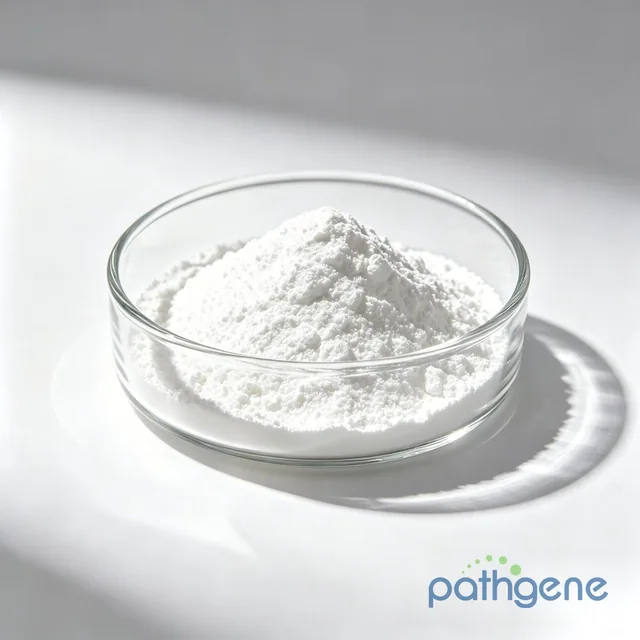
Adenosine triphosphate disodium salt is a nucleotide salt used in biochemical energy-transfer and enzyme-reaction research. The available COA reports dry-basis assay, moisture and pH separately. Specify adenosine triphosphate disodium, not ADP, AMP or adenosine. Confirm the salt and hydration form and use the COA assay basis when calculating the quantity for a biochemical system. Product image: AI-generated ingredient illustration; actual batch appearance is subject to the sample and COA.
ATP Disodium Bulk Supply
PathGene supplies ATP Disodium, CAS 987-65-5, with specification >95% dry-basis assay.
Dry-Basis ATP Assay
ATP disodium for enzyme reactions and biochemical research, specified on a dry basis.
Batch Quality Documentation
Batch COA supports the quality evaluation of ATP Disodium and the agreed purchasing specification.
Evaluation Samples
Request ATP Disodium samples for incoming-quality evaluation and project trials.
Supply and Packaging
MOQ: 1 kg. Packaging options: 1 g, 100 g, 1 kg, 25 kg.
Test items, specifications and results for the listed batch are shown here. View or request a COA in the quality documents section.
Batch No.
PGATP-260402
Test date
2026-04-02
Specification
Q/PG-INHOUSE
Pack size
25 kg/barrel
Storage
Sealed, dry and protected from light
Conclusion
Conforms
| Test Item | Specification | Result |
|---|---|---|
| Identification | Conforms | Conforms |
| Assay (dry basis) | >95% | 98.2% |
| Water | ≤10% | 7.8% |
| pH | 2.0–4.0 | 2.99 |
| Heavy metals | ≤10 ppm | Complies |
View an available COA in the quality documents section. Check the document for its product form and batch; request a signed COA for your purchasing or shipment batch separately.
Enzyme catalysis
Diagnostic reagent raw materials
Distinguish dried-basis ATP-disodium assay from working-solution concentration; magnesium, pH and substrates affect reaction performance.
98.2%
Assay (dry basis)
7.8%
Water
PGATP-260402 · Results apply to this lot; interpret purity, assay and water on their respective bases.
Composition candidates, processing sequences and tests support pilot design. Confirm candidate excipients and processes using this material in the actual finished formulation.
Study combinations, individual-ingredient mechanisms and product precedents are distinguished; expand each entry for scope and pilot-development checks.
For kinase or ATPase assay development, evaluate ATP with controlled Mg²⁺ because free ATP, MgATP and free magnesium can affect substrate binding and reaction rate. Run a magnesium titration with matched pH and ionic-strength controls, and measure ATP/ADP conversion; do not treat this laboratory pairing as a consumer supplement recommendation.
Expand research and formulation notes +Collapse research and formulation notes −Development rationale: For kinase or ATPase assay development, evaluate ATP with controlled Mg²⁺ because free ATP, MgATP and free magnesium can affect substrate binding and reaction rate. Run a magnesium titration with matched pH and ionic-strength controls, and measure ATP/ADP conversion; do not treat this laboratory pairing as a consumer supplement recommendation.
Evidence scope: Primary enzyme-kinetics research has examined magnesium and ATP together in Na⁺/K⁺-ATPase phosphorylation. The effect is enzyme- and assay-condition-dependent; validate Mg²⁺ demand, ATP degradation and counterion effects for each target system.
Pilot checks: Include no-enzyme, no-substrate and reagent blanks; compare cofactor/enzyme levels and establish linearity, recovery and inter-lot precision.
1992 · Effects of magnesium and ATP on pre-steady-state phosphorylation kinetics of the Na+,K(+)-ATPase. ↗Literature-Supported Research Directions
Public chemical databases list Adenosine Triphosphate Disodium Salt under the stated identity; this reference supports identity review and does not replace the batch COA.
Citation: PubChem compound recordView source
In cultured salivary-gland cells, a primary study found that mechanically induced intercellular calcium waves involved extracellular ATP and purinergic receptors. This is cell-signaling research on ATP released outside cells, not evidence that orally supplied ATP has the same biological route.
Citation: Ryu et al. Extracellular ATP and P2Y2 receptors mediate intercellular Ca(2+) waves induced by mechanical stimulation in submandibular gland cells: Role of mitochondrial regulation of store operated Ca(2+) entry. Cell calcium (2010). PMID: 20022109.View source
Research in 3T3-L1 adipocytes reported that extracellular ATP stimulated calcium entry through a pathway involving P2Y2 receptors and STIM1/ORAI1. The result is specific to an experimental cell model and concentration, supporting biochemical assay research rather than a finished-product health claim.
Citation: El Hachmane et al. Extracellular ATP activates store-operated Ca2+ entry in white adipocytes: functional evidence for STIM1 and ORAI1. The Biochemical journal (2018). PMID: 29335300.View source
Note: For ingredient R&D and scientific information; findings depend on model, dose, formulation and population and do not constitute a treatment claim or efficacy guarantee.
Lead Time
3–5business days
Standard products are generally in stock; confirm the exact lead time with us.
Minimum Order
1 kg
Samples, pilot trials, and commercial volumes are supported.
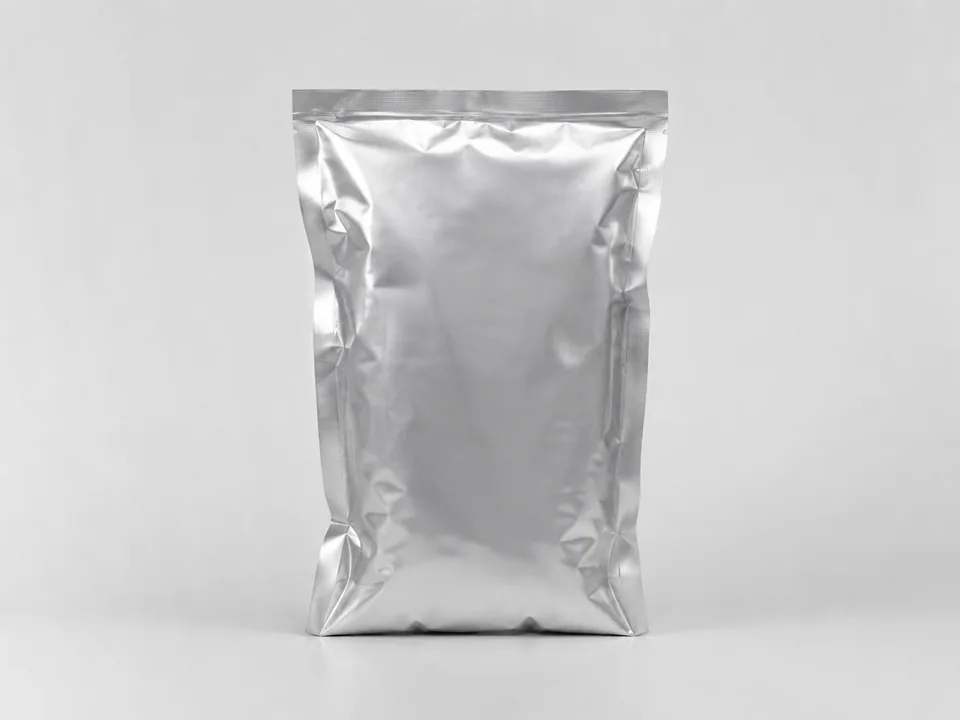
Foil Pouch
Sealed, moisture-protective inner packaging

Fiber Drum
Standard outer packaging for bulk transport
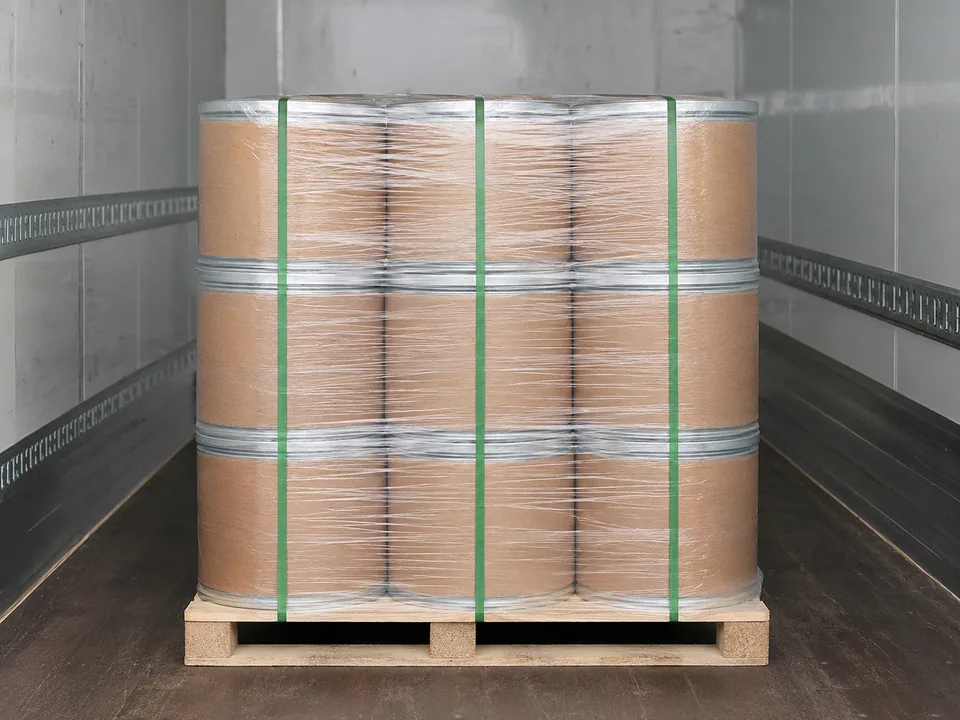
Bulk Shipping
Palletized and stretch-wrapped for protection
Ambient storage: foil pouch + fiber drum; temperature controlled: foil pouch + insulated box/carton. Confirm by product.
Custom packaging: Custom foil bags or HDPE drums, GMP label printing, and export documentation are available. Contact us for a quote.Images are packaging illustrations.
Certifications
The stated purity and batch result are shown separately. Confirm the method, dry-basis calculation and salt or hydrate form against the current COA.
Formulation work should confirm concentration, pH, light, moisture and hold-time controls for Adenosine Triphosphate Disodium Salt; suitability depends on the final format and market requirements.
The raw-material MOQ for ATP disodium powder is 1 kg, with pack options of 1 g, 100 g, 1 kg, 25 kg. Quantity calculations should verify dry-basis assay and hydration form.
Specify adenosine triphosphate disodium, not ADP, AMP or adenosine. Confirm the salt and hydration form and use the COA assay basis when calculating the quantity for a biochemical system.
Adenosine triphosphate disodium (ATP disodium) powder, CAS 987-65-5, is specified at >95% assay on a dry basis. For enzyme reactions or biochemical research, review identity, salt and hydration form, together with the batch COA calculation basis.
ATP disodium dry-basis assay is reported under the defined dry-basis calculation. Prepare solutions using the supplied salt and hydration form and any water correction required by the method. Do not treat a dry-basis percentage as an uncorrected as-is mass fraction.
Documents are subject to product and batch availability; third-party reports are provided only when applicable.
Quality documents
The specification sheet defines acceptance limits. The COA shows actual batch results, which may vary by batch. Third-party reports are provided only for products or batches that have been independently tested.
Stable acceptance criteria · Available on request
Actual test data · Check the COA for the applicable batch
Related Products
NMN Powder (β-Nicotinamide Mononucleotide)
β-Nicotinamide Adenine Dinucleotide Powder
Nicotinamide Riboside Chloride Powder
Nicotinamide Riboside Hydrogen Malate Powder
Interested in ATP disodium?
Our R&D team will respond to your inquiry or sample request within 24 hours.
Scan to add WeChat

Alex Huang · Mon–Fri 9am–6pm CST