

Technical2026-10-19 · 8 min read
L-Carnosine and Anti-Glycation: Evidence & Formulation
Explore L-carnosine anti-glycation research, carbonyl trapping, human evidence, and practical checks for powder, capsule and tablet formulation.
Read article →Knowledge Center
Practical guides for formulators and procurement managers: ingredient comparisons, quality verification, regulatory updates.
Explore L-carnosine anti-glycation research, carbonyl trapping, human evidence, and practical checks for powder, capsule and tablet formulation.
Read article →
Compare PQQ and CoQ10 research, distinguish ubiquinone from ubiquinol, and review capsule, softgel, stability and batch COA checks for formulation.
Read article →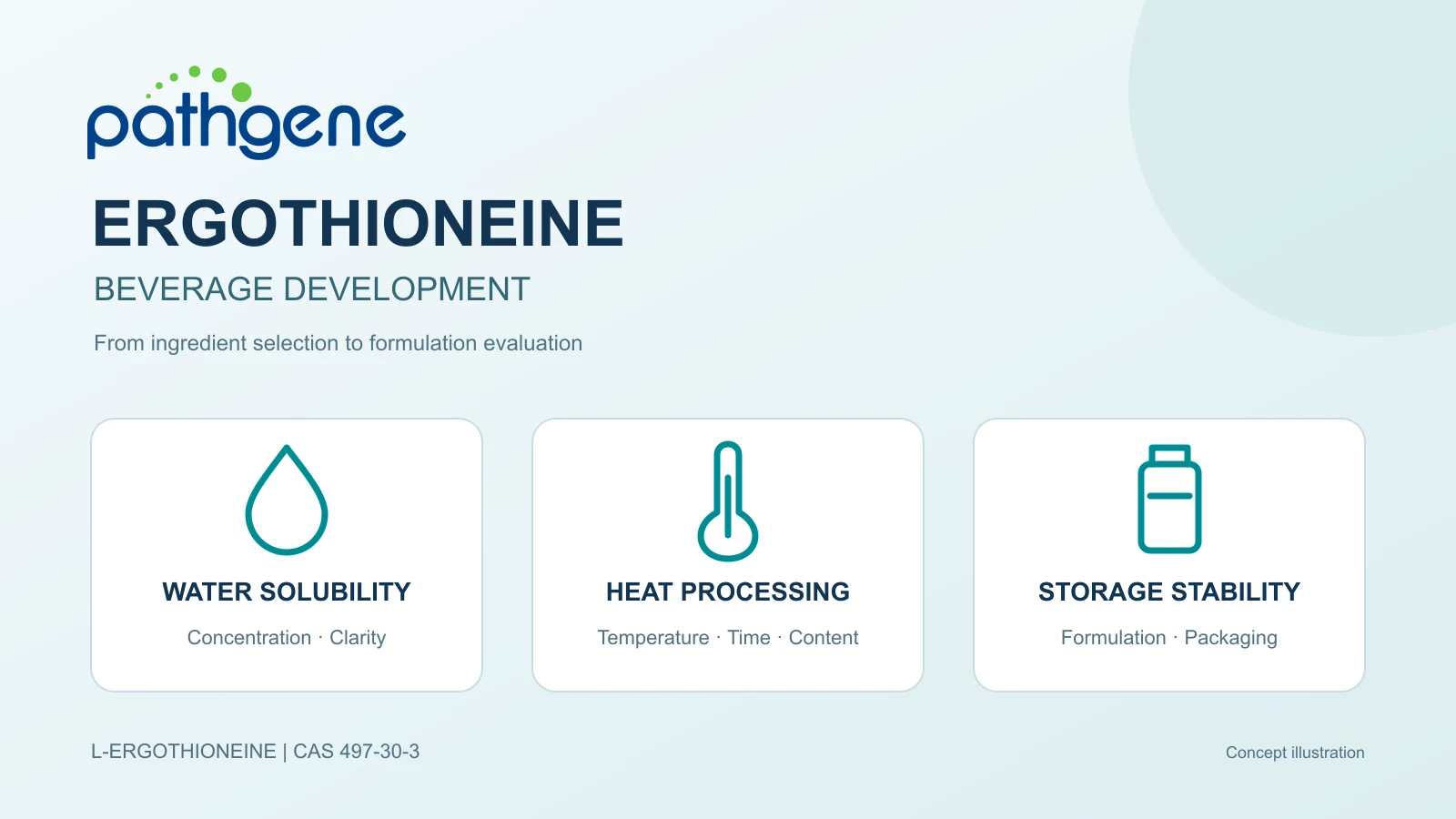
Ergothioneine is soluble in water. For beverage development, confirm dissolution and clarity at the intended concentration, then measure EGT through the actual process and packaged storage conditions.
Read article →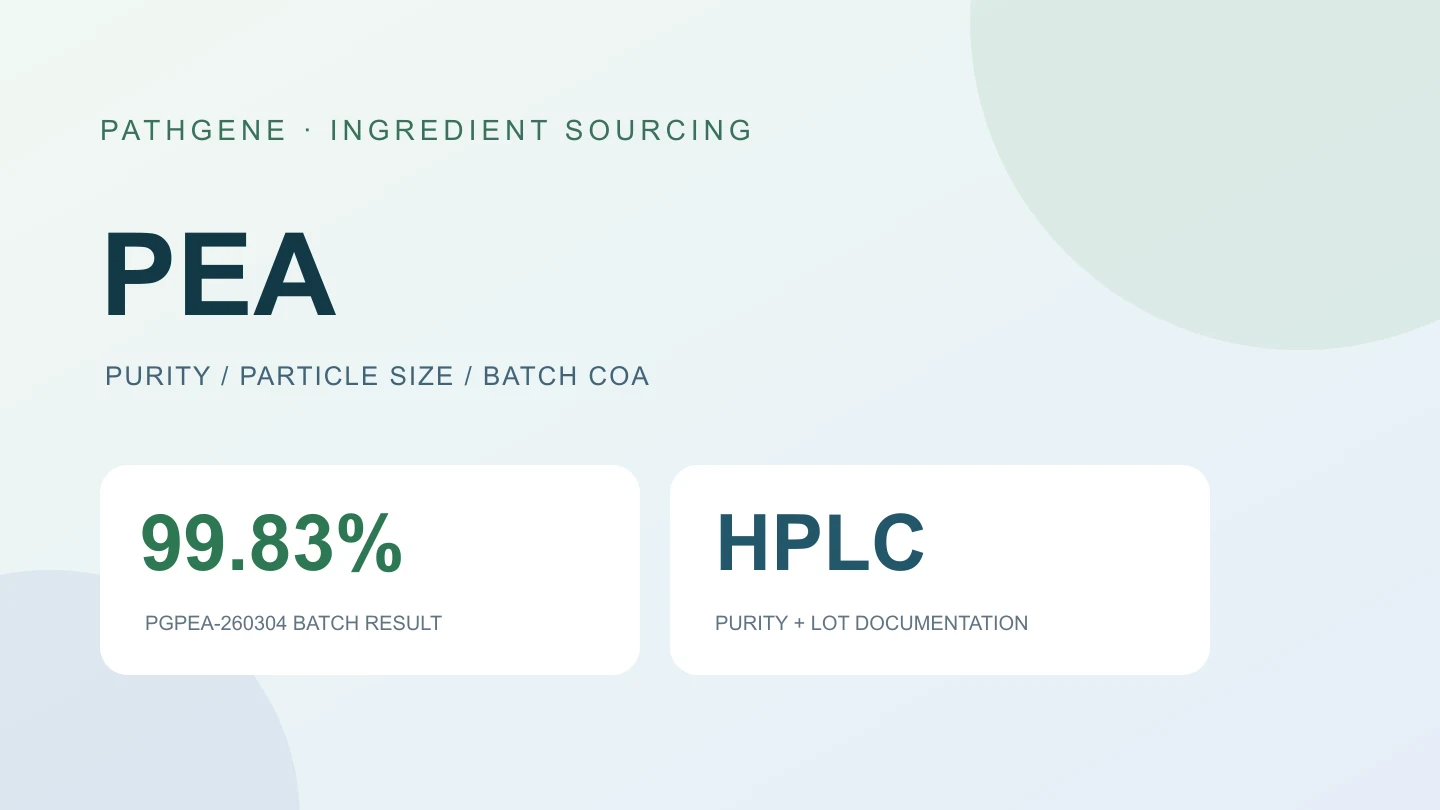
Source bulk PEA powder, CAS 544-31-0: ≥99% HPLC specification, 99.83% batch result, particle-size requirements, samples and MOQ 1 kg.
Read article →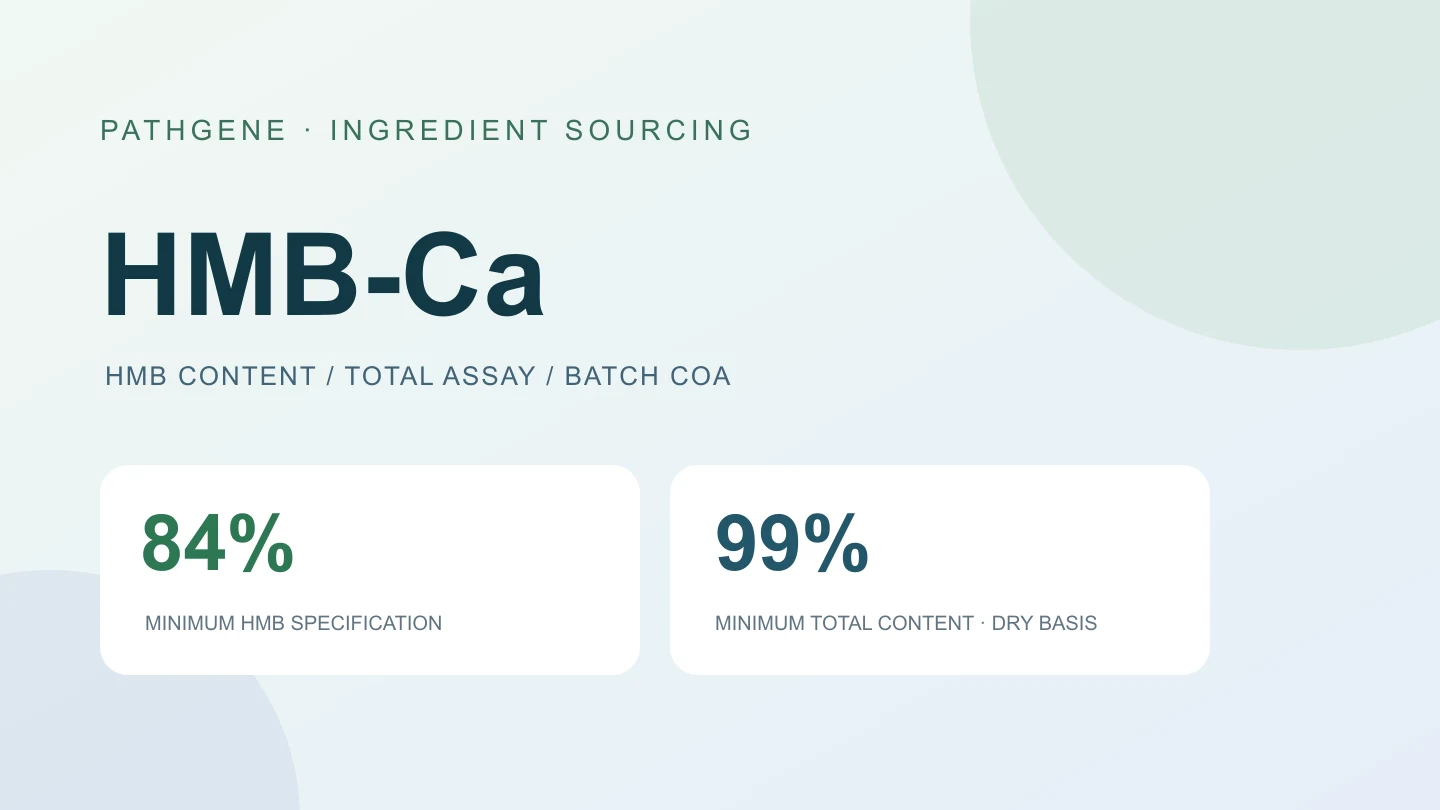
Compare calcium HMB specifications: ≥84% HMB vs ≥99% dry-basis total content. Review batch COA, hydrate form, samples and bulk supply.
Read article →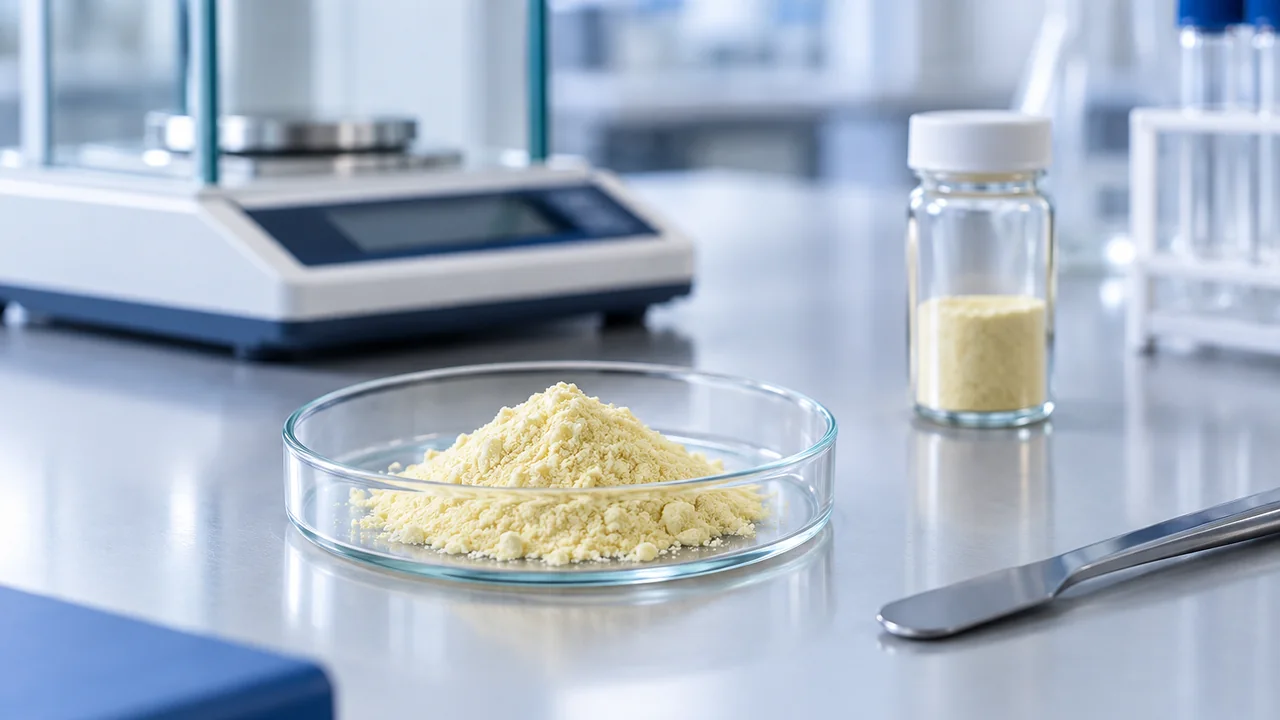
Compare PS 50% and 70% powder suppliers using matched batch results, source and carrier evidence, assay basis and cost per unit of PS.
Read article →Compare the three NR salt powders by exact identity, CAS, assay basis and batch evidence, with direct links to PathGene chloride, hydrogen malate and tartrate specifications.
Read article →
A formulation rationale for combining Magnesium L-threonate with citicoline (CDP-choline), separating biological plausibility, preclinical combination evidence, human evidence and the validation design needed to test synergy.
Read article →
One citicoline sample, three quality dimensions: 99.91% purity, four heavy metals not detected and low microbial counts, with methods and detection limits.
Read article →
A practical guide to fermentation-based PQQ disodium salt powder, comparing production routes and reviewing identity, assay, stability, formulation and batch COA requirements.
Read article →
A practical guide to alpha-glucosyl hesperidin beverages: glycosylation, peripheral-temperature research, pilot formulation checks and lot COA review.
Read article →
A practical NR gummy decision guide: compare NRC and NRHM by raw-material taste, NR-equivalent dose, humidity control, packaging, and stability testing.
Read article →
Selling NMN, NR or NAD+ in Australia? Compare TGA listing conditions, NRC food-use permissions and the questions to resolve before sourcing ingredients.
Read article →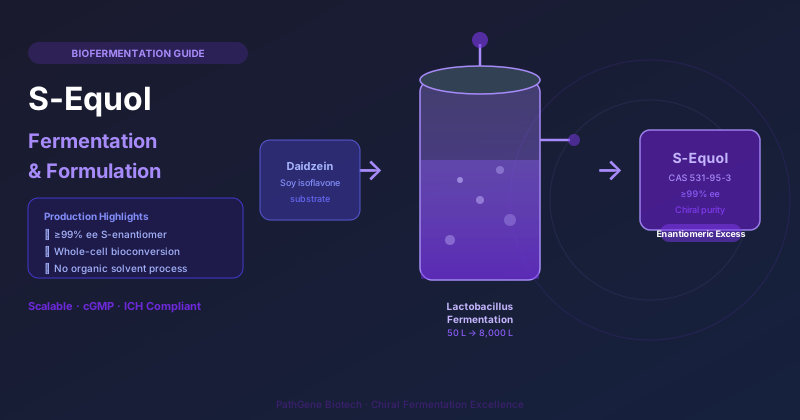
S-Equol is not a generic synonym for equol. This buyer guide explains stereochemical identity, chiral purity, assay interpretation, storage and the batch documents needed before approving a bulk ingredient.
Read article →
A procurement-focused guide to verifying a low-endotoxin NAD+ powder claim: lot-matched reports, test method, interference controls, packaging and the boundary between raw-material qualification and sterile-product release.
Read article →
Understand what SAC means in garlic, how S-allyl cysteine differs from allicin and aged-garlic extract, and which identity and batch documents matter when sourcing SAC powder.
Read article →A practical pre-purchase checklist for matching the actual batch, technical specification, safety information, packaging, and traceability documents before a bulk ingredient order.
Read article →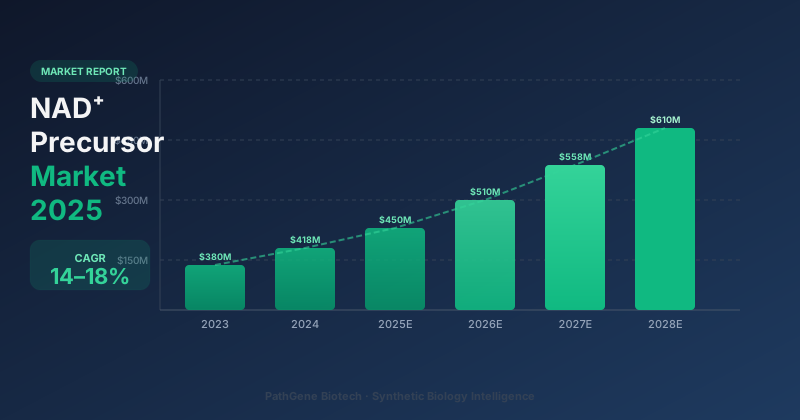
A formulation-focused guide to screen PDRN, GHK-Cu, and ceramide ingredients for serums, creams, masks, and other personal-care formats without turning preliminary science into finished-product claims.
Read article →A practical buyer guide to PQQ disodium identity, assay basis, lot COA review, light protection, microbial and elemental-impurity checks, and market-specific documentation.
Read article →Review 6S calcium-salt identity, real batch assay and water, then assess light, pH and heat in the actual formulation and package.
Read article →A buyer-focused guide to sourcing spermidine trihydrochloride: confirm the salt form and assay basis, review the lot COA and handling data, compare samples to commercial lots, and plan moisture-controlled packaging.
Read article →
Read an NMN batch COA using a disclosed lot example, distinguishing product specifications, purity, dry-basis assay and shipment acceptance.
Read article →
A practical comparison of NR Chloride and NR Hydrogen Malate for capsules and tablets, covering salt form, NR-equivalent dosing, moisture, flow, compression, and stability.
Read article →A procurement checklist for NAD+ bulk material covering identity, assay, related substances, elemental impurities, residual solvents, microbiology, and batch COA.
Read article →A practical identity and specification checklist for buyers comparing citicoline and citicoline sodium in formulation projects.
Read article →USP and Ph. Eur. are not interchangeable quality badges. This Citicoline buyer guide shows how to map the intended market, chemical form, method, acceptance criteria and batch COA without inventing compendial limits.
Read article →A process-focused overview of engineered-strain cultivation, enzymatic bioconversion, purification, crystallization, drying, and quality release for bulk citicoline.
Read article →A formulation-oriented guide to citicoline's water solubility, hygroscopicity, dosage forms, moisture control, and packaging decisions.
Read article →The difference between assay and purity in HPLC is the calculation and the question being answered. Review the method, reference standard, reporting basis and complementary tests before comparing supplier numbers.
Read article →S1PC is a stable, garlic-derived organosulfur amino acid formed during aged garlic extract processing — but organosulfur compounds as a class are notoriously easy to misquantify. Here's what separates a verifiable batch from an unverified one.
Read article →NMN and NR haven't cleared China's domestic food or pharmaceutical approval process, so they're classified and supplied as industrial/chemical raw materials for research, export, and other non-food, non-pharma uses. Here's what that status actually means for a buyer, and why a supplier stating it plainly is a good sign, not a red flag.
Read article →NMN, NAD+, NR, NRHM, NMNH, and NADH are often marketed as interchangeable "NAD+ precursors," but they differ in CAS identity, purity, salt form, and cost. This is a side-by-side decision guide for picking the right form for your formulation.
Read article →A one-off cheap order and a genuine long-term supplier relationship get evaluated on different criteria. This guide covers the concrete checks — batch consistency, certification verification, COA/MSDS accuracy, and capacity transparency — that separate the two.
Read article →A COA is only useful if you know how to read it — and "Not Detected" doesn't mean what most people assume it means. Here's a working guide to LOD/LOQ, lab accreditation, and the specific red flags that separate a real report from a rubber stamp.
Read article →For a small supplement or cosmetic brand, "which supplier do we pick" is really a question of which business model you want to run. Here's a framework covering MOQ, accountability, speed, and cost at different volume tiers, so the choice is deliberate rather than default.
Read article →A sample that matches the spec sheet on paper doesn't guarantee it will perform the same way in your warehouse or your formulation. This checklist covers the verification steps buyers should run before committing to a bulk order.
Read article →Cross-border sourcing of active ingredients fails less often at the factory and more often in customs — misclassified HS codes, incomplete paperwork, and unrealistic lead-time assumptions are where shipments actually get stuck.
Read article →"≥99% purity" and "≥99.5% purity" sound like a rounding difference, but that 0.5-percentage-point gap is made up of several distinct things — and whether it matters to your formulation depends entirely on what those things are, not on the headline number.
Read article →"Fermentation-derived" is often framed as a strictly better production route than chemical synthesis, but the real trade-offs — fewer steps and less solvent versus cost and scalability — depend heavily on the specific molecule, not on a universal rule.
Read article →Ordering raw powder is the easy part — turning it into a finished capsule on a shelf involves several process steps most first-time brand owners have never seen. Here's what actually happens at each stage.
Read article →The same ingredient name on two quotes doesn't mean the same product. Synthesis route, verified vs. claimed purity, testing documentation, and batch consistency all show up in price — and a suspiciously cheap quote is usually cutting one of them.
Read article →NADH stability is not proven by a day-one COA alone. Before approving bulk material, review the assay method, batch age, protected storage, shipment controls and a retest plan for the actual lot.
Read article →"Pomegranate-derived" sounds reassuring on a spec sheet, but urolithin A isn't actually present at meaningful levels in pomegranate fruit — it's a gut-bacteria metabolite that only a subset of people produce efficiently. Here's what that means for how commercial-grade material is actually made, and what to verify before you buy.
Read article →Dihydroberberine and berberine hydrochloride are different materials. Compare chemical identity, quality documents and formulation testing before using pharmacokinetic research to guide a purchase.
Read article →How to evaluate GHK-Cu formulation compatibility, interpret separate purity and copper results, and review batch documents before bulk sourcing.
Read article →If your marketing team builds finished-product claims around a random blog post that overstates what PQQ does, you inherit that regulatory risk — not the blog. Here's what's actually substantiated about PQQ, sourced honestly, so you can market it defensibly.
Read article →NAD+ is the name every consumer recognizes, which is exactly why some brands default to it without asking whether the molecule itself makes formulation sense. Here's the real structural reason experts keep raising this question.
Read article →Of all the NAD+ precursors, NR has the most actively litigated patent history in the industry. If you're sourcing bulk nicotinamide riboside for a finished product, this is genuinely worth understanding before you sign a purchase order — not after.
Read article →"First-to-market" is a genuine selling point, but for a raw material buyer it also raises a fair question: is the supply chain behind this ingredient mature enough to support your production timeline? Here's an honest look at what makes NMNH different.
Read article →If you searched for NADP+ expecting the same market as NMN or NAD+, the buyer profile is actually quite different. Here's who typically sources this ingredient and what actually matters for their use case.
Read article →If you're used to working with NMN or NAD+ and expect the same shelf life from NADPH, plan again — this cofactor is the most perishable in the family, for structural reasons worth understanding before you set your own product's expiration date.
Read article →Catalog convenience groups FAD with NMN, NAD+, and NADH under "NAD+ precursors," but biochemically it belongs to a different vitamin family entirely. If you're formulating a combination product, this distinction actually matters.
Read article →If you've handled raw spermidine, you know the smell — and if you're building a capsule or tablet around it, that smell doesn't stay in the raw material bag. Here's the chemistry behind it and what actually works to manage it in a finished product.
Read article →If you're comparing fisetin quotes across suppliers and the purity numbers don't line up with the price, the assay method — not the material — is often the reason. Here's what's actually going on.
Read article →Ergothioneine's natural concentration in mushrooms is genuinely low, which creates a real supply-chain question worth asking before you scale a product around it: how was your specific batch actually produced?
Read article →Alpha-ketoglutarate's rise as a longevity ingredient has brought a wave of interest — and a real, easy-to-miss detail that affects how you calculate active dosage across different suppliers' products.
Read article →If you've only ever sourced DHEA for the US market, it's easy to assume it's a straightforward global dietary ingredient. It isn't — and finding that out after a shipment is held at customs is the wrong time to learn it.
Read article →If you've searched "ALA supplier" and gotten a mix of unrelated-looking results, you're not confused — the industry genuinely uses this abbreviation for two entirely different compounds. Here's how to make sure a purchase order actually gets you the ingredient you meant.
Read article →GABA is marketed heavily around calm and relaxation, which raises an obvious scientific question: as the brain's own inhibitory neurotransmitter, can an orally ingested dose actually get there? Here's an honest look.
Read article →Review reduced glutathione oxidation, liquid-formulation conditions and separate purity, assay and GSSG results before bulk purchasing.
Read article →If you've read our post on why reduced glutathione oxidizes so readily, S-Acetyl-L-Glutathione is the direct answer to that problem — a deliberately engineered modification, not a naturally abundant compound. Here's how it actually works.
Read article →The MTHFR gene has become a genuine consumer talking point, driving demand for "active folate." Fewer buyers ask the more precise question: is the 5-MTHF you're sourcing actually the single active isomer, or a mixture?
Read article →If you're used to sourcing small-molecule ingredients with a straightforward HPLC purity percentage, nattokinase requires a different mental model entirely. Here's what actually determines whether a batch performs.
Read article →Compare L-carnosine and beta-alanine identity and muscle research, then check bulk ingredient assay, related substances, matching COA and quotation requirements.
Read article →A bulk SAMe buyer guide to exact salt identity, SAM-component content, salt assay and separate S,S-isomer evidence, using the disclosed CAS 97540-22-2 record.
Read article →Clarify PLP and P5P, distinguish monohydrate CAS 41468-25-1 from the parent entry, and review dry-basis assay before sourcing.
Read article →Use separate ubiquinol and ubiquinone results, physical-form and carrier documentation, and material-specific handling controls to evaluate bulk reduced CoQ10.
Read article →If you've tried formulating a clear functional beverage or eye-care serum with native rutin, you've likely already run into its solubility ceiling. Here's the actual chemistry behind the glucosylated alternative.
Read article →Pterostilbene is frequently marketed as "better absorbed than resveratrol," and unlike some comparative claims in this category, this one has a specific, well-documented structural reason behind it worth actually explaining.
Read article →Sialic acid's connection to human milk oligosaccharides makes it a natural fit for infant nutrition positioning — but that same application involves processing conditions (high-heat sterilization) that this ingredient is genuinely sensitive to. Here's what to plan around.
Read article →Skincare formulators often shop for "ceramide" the way they'd shop for a small-molecule active with one fixed structure. The reality is closer to shopping for an oil blend — the ratio of components determines what you're actually formulating with.
Read article →For PDRN, a single average molecular-weight result is not the same as a full distribution. Buyers should match the grade, lot, test method and intended use before treating a COA as application evidence.
Read article →Review sophorolipid HLB, acid/lactone composition and solids content, then qualify emulsification or separation in the actual oil/water system.
Read article →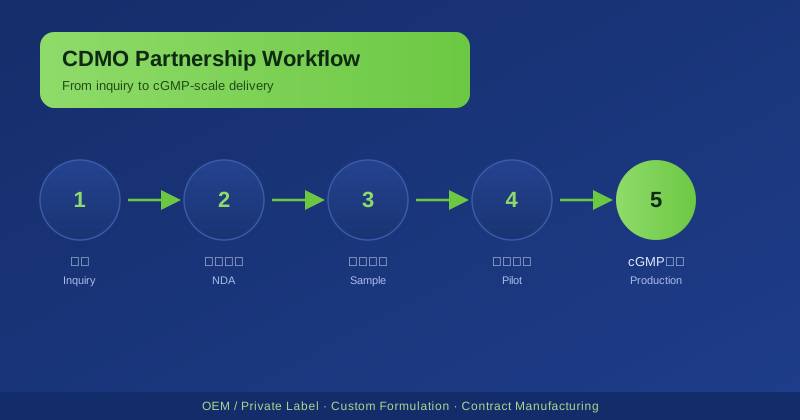
More supplement brands are trading in-house manufacturing plans for CDMO partnerships. Here's the real workflow, what buyers now screen for, and why speed and flexibility are winning over pure cost.
Read article →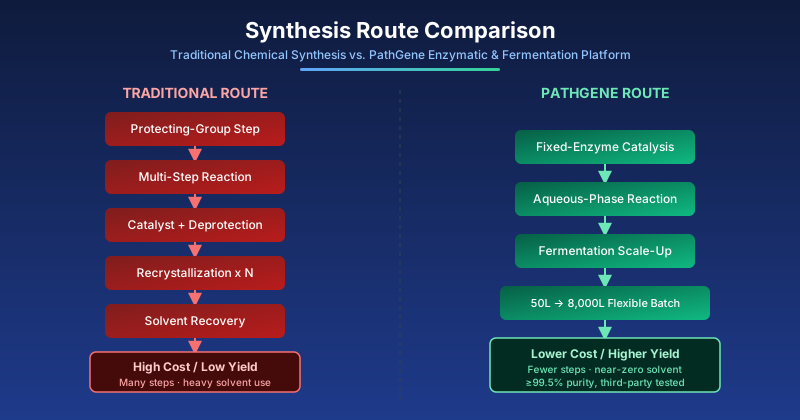
Complex synthesis, high costs, and low yields are a structural problem across active-ingredient manufacturing. PathGene's enzymatic and fermentation platform addresses the problem at the process level rather than optimizing around it.
Read article →Purity and quality control remain genuinely hard problems in synthetic-biology ingredient manufacturing; PathGene addresses them with Pfizer-trained quality engineering, patented synthesis routes, and dual USP/EP certification.
Read article →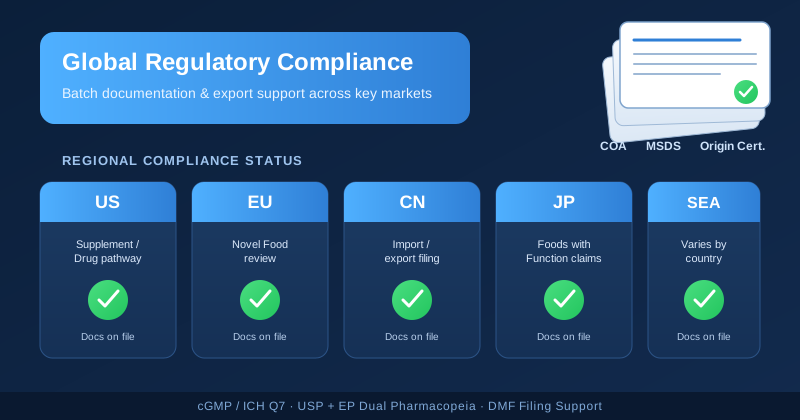
Regulatory classification for NAD+ precursors and other novel actives keeps shifting across markets, and suppliers without complete documentation can leave buyers exposed at customs or during audits. Here's why this is genuinely hard, and how PathGene helps reduce that risk.
Read article →A market intelligence report on the NAD⁺ supplement landscape in 2025 — NMN regulatory update, NMN vs NR dynamics, emerging ingredients (NRHM, S-Equol, CDP-Choline stacks), and quality sourcing trends.
Read article →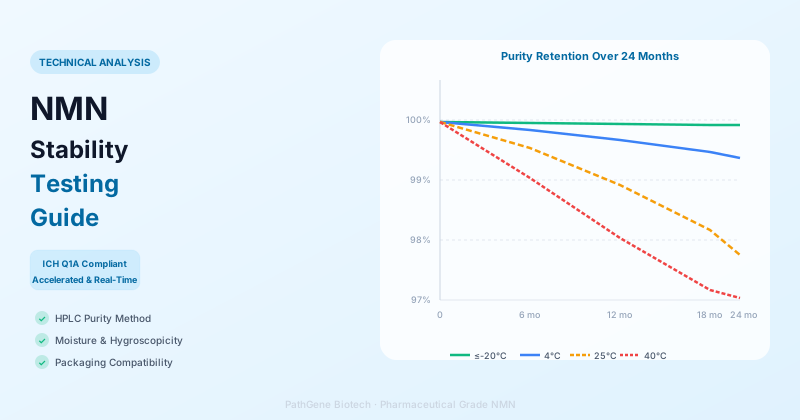
Plan an NMN stability evaluation around the actual formulation, process, packaging and analytical method, distinguishing research from supplier lot evidence.
Read article →
A practical regulatory and logistics guide for procurement managers importing NMN, CDP-Choline, and other nutraceutical ingredients from China to US, EU, and APAC markets.
Read article →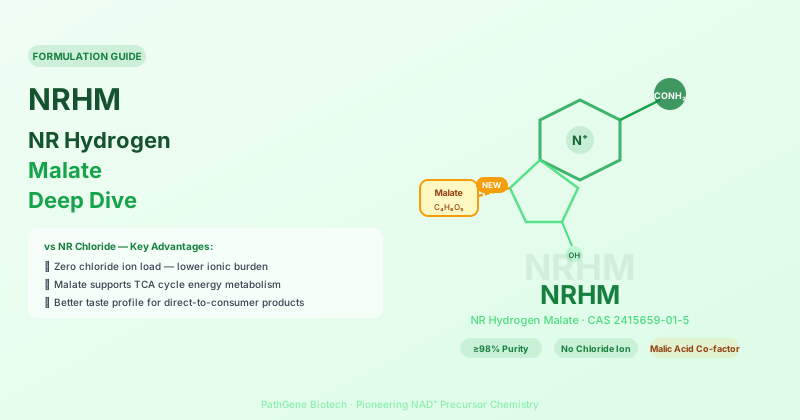
A specification-focused guide to NR hydrogen malate, its reported composition, and the evidence buyers should request before comparing it with NR chloride.
Read article →A sourcing guide to S-Equol identity, engineered-microorganism bioconversion, chemical and optical purity, batch documentation, and formulation review.
Read article →
A technical comparison of CDP-Choline and Alpha-GPC for nootropic formulators — covering choline content, BBB penetration, clinical evidence, and cost.
Read article →
Seven practical checks for comparing bulk NMN suppliers and qualifying the material, documents and delivery terms before a purchase order.
Read article →A practical NMN buyer checklist for separating HPLC purity from assay, checking the reporting basis, reviewing related substances and matching every result to the actual commercial batch.
Read article →A head-to-head technical comparison of NMN and NR for nutraceutical and pharmaceutical formulators — covering bioavailability, stability, purity targets, and regulatory status.
Read article →Scan to add WeChat

Alex Huang · Mon–Fri 9am–6pm CST