
By PathGene Biotech · Technically reviewed by Alex Huang
Spermidine Trihydrochloride Bulk Supplier Guide: COA, Samples and Batch Consistency
Bulk spermidine trihydrochloride: identity and storage first
For PathGene spermidine trihydrochloride powder, CAS 334-50-9, the current product specification lists 2–8°C and protection from moisture, with a shelf life of 24 months. Follow the supplied lot instructions and agree shipping conditions before ordering. Request a reviewed COA matching this salt form and the delivery lot.
A sound bulk purchase of spermidine trihydrochloride starts by confirming the exact material—not simply the word “spermidine.” The purchase specification should identify the trihydrochloride salt, CAS number, assay basis and intended use. Then compare the actual lot COA, packaging and storage information with the qualification sample. For repeat supply, build a simple change-control process so a good development sample is not treated as proof for every later commercial batch.
1. What should be confirmed before requesting a sample?
| Question | Buyer concern | Evidence to request |
|---|---|---|
| What is the exact salt form? | Free-base spermidine and spermidine trihydrochloride have different identities and weight calculations. | Product name, CAS number, identity method and molecular information. |
| How is assay expressed? | Assay, water and dosage calculations must use a stated basis. | Specification, lot COA, assay method reference and water result. |
| How is it manufactured and handled? | Source route, residual-risk profile and moisture exposure matter to a qualification review. | Appropriate manufacturing summary, SDS, storage and packaging statement. |
| Can the sample represent supply? | A lab sample does not automatically prove commercial reproducibility. | Sample lot COA, proposed commercial specification and batch-consistency discussion. |
2. COA checks that matter in a procurement review
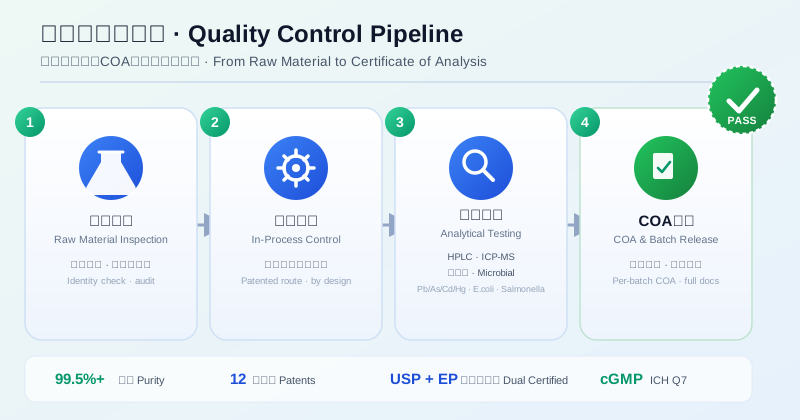
First match the lot number. Then review identity, assay, water or loss on drying, appearance, relevant inorganic or organic impurities, elemental impurities and microbiology where the intended use calls for them. Do not assign a universal acceptance limit from another supplier or another market: the finished-product owner must establish specifications appropriate to the intended use. For dietary-supplement component procurement, FDA guidance describes establishing identity, purity, strength, composition and contamination specifications, with controls for supplier COAs where those are used.
3. Sample-to-commercial qualification plan
- Request a sample with its own COA and confirm the exact salt form and assay basis.
- Run identity, compatibility, odor and handling checks in the intended dosage form.
- Agree the commercial specification, packaging, storage, shelf-life or retest statement and documentation package before the purchase order.
- On each commercial delivery, match the label, COA and shipping records; investigate any material change before use.
- For higher-risk or higher-volume projects, set periodic reconfirmation or third-party testing in the quality agreement.
4. Packaging and formulation handling
Handle the powder under the storage conditions on the supplied specification and avoid unnecessary humidity exposure during weighing and blending. Confirm the intended capsule, tablet, powder or other formulation with full-formula compatibility work; raw-material solubility or appearance alone does not prove finished-product performance. Packaging selection should be based on the material’s moisture and storage profile, not an assumed generic drum format.
5. Storage conditions to confirm before bulk shipment
For the material-specific requirement, follow the agreed specification and lot documentation. In practice, buyers should confirm sealed moisture-barrier packaging, a cool and dry storage environment, light protection where specified, and handling controls that limit repeated humidity exposure. Do not infer a fixed temperature or shelf life from a generic spermidine page; confirm the current batch documents before release.
Evidence and regulatory boundary
Scientific and safety literature may discuss spermidine or a specific spermidine trihydrochloride material, but it does not automatically establish the regulatory status, permitted claim or use level of every supplier’s lot in every market. Review the destination-market requirements separately and avoid treating fermentation route, purity, or a raw-material study as a finished-product claim.
Review PathGene spermidine trihydrochloride
See the spermidine trihydrochloride product page for the current material profile. State the intended dosage form, target market, desired sample size and documentation needs when requesting a quotation.
References
FDA dietary-supplement CGMP small-entity guide; Chrysostomou et al., Food and Chemical Toxicology (2024), safety assessment of high-purity spermidine trihydrochloride; European Commission novel-food application summary for spermidine-3HCl.
Frequently Asked Questions
Does a passed sample guarantee later commercial batches?+
No. A sample supports early qualification. Each commercial lot should be reviewed against the agreed specification and its own lot-specific COA.
Can a supplier COA replace the finished-product owner's specification?+
No. The buyer or finished-product owner needs an agreed specification appropriate to the intended use; the COA then shows whether a particular lot meets it.
What storage conditions are listed for PathGene spermidine trihydrochloride?+
The current PathGene product specification lists 2–8 °C and protection from moisture. Check the label and documents supplied with the quoted lot, and follow any batch-specific instructions.
Ready to evaluate our products?
Request a sample or send an inquiry — our R&D team responds within 24 hours.